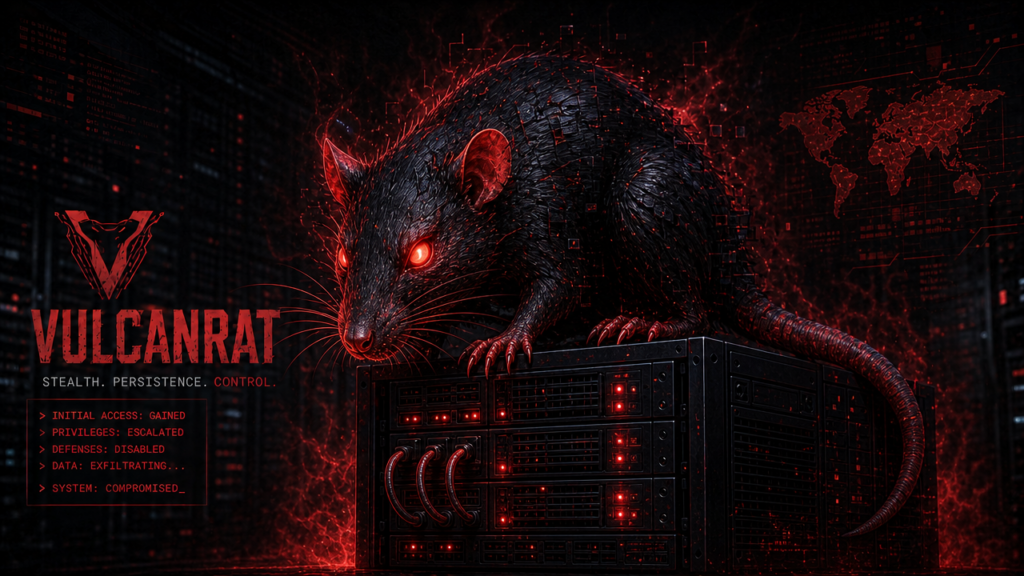



For years, macOS had a reputation: Safer. Less targeted. Lower risk. That narrative is officially outdated.
Recent threat intelligence shows that macOS is now a primary target for sophisticated cyberattacks, with malware, infostealers, and ransomware campaigns rapidly expanding beyond Windows environments.
And it’s not just noise. Attackers are evolving, and macOS environments are increasingly in their path.
What is macOS endpoint security today?
macOS endpoint security refers to protecting Mac devices against modern threats like ransomware, malware, and data exfiltration using security tools designed to prevent, detect, and respond to attacks.
But here’s the issue: most macOS security strategies today are still detection-first, and that’s not enough.
Why macOS is no longer “low risk”
The threat landscape has changed dramatically.
- macOS malware is growing rapidly, with a significant increase in backdoors and credential stealers
- Infostealer campaigns are now specifically targeting Mac users using social engineering and malicious installers
- Nation-state actors are actively targeting macOS environments with sophisticated attack chains
At the same time, attackers are shifting tactics. Instead of exploiting vulnerabilities, they’re tricking users into installing malware, leveraging legitimate tools for malicious execution and operating at machine speed to steal data and encrypt systems.
In fact, modern macOS attacks increasingly rely on sophisticated AI-enabled tactics, user-driven execution and evasive techniques, making traditional security controls far less effective.
Why detection-based macOS security fails
Here’s the uncomfortable truth: by the time most tools detect an attack it’s already too late. Modern threats:
- Execute in memory
- Avoid traditional signatures
- Move laterally and exfiltrate data quickly
Even Apple continues to introduce new protections and rapid patching mechanisms, but attackers are adapting just as fast. And ransomware itself is evolving into cross-platform, adaptive threats capable of targeting macOS alongside Windows and Linux.
The result: detection alone cannot reliably stop the outcome.
The real problem: macOS security fails twice
Most organizations run into two major barriers when securing macOS:
1. The Prevention Gap — Ransomware and data exfiltration attacks operate at machine speed.
Detection-based tools:
- Alert after execution
- Miss evasive or unknown threats
- Struggle with fileless and in-memory techniques
2. The Deployment Gap — Even when tools exist, they often fail to scale.
macOS environments are:
- MDM-driven (Jamf, Intune, etc.)
- Distributed across teams and geographies
- Dependent on automated deployment workflows
If a solution requires manual installation or complex setup, it often stalls in pilot or it never reaches full coverage.
How do you actually secure macOS endpoints?
To effectively protect macOS environments today, organizations need:
- Prevention-first security that stops attacks before execution
- Exfiltration awareness to detect and block data movement
- Native support for macOS environments
- Enterprise-ready deployment through MDM workflows
Because security that can’t deploy at scale…is security that doesn’t exist.
Closing both gaps with Morphisec Mac Protector
This is exactly what Morphisec Mac Protector (MMP) is designed to solve. Rather than relying on detection after compromise, MMP delivers deterministic, prevention-first protection against ransomware and exfiltration-style attacks on macOS.
At the same time, it removes the biggest operational barrier to adoption: deployment.
With a purpose-built Mac Distribution Kit, Morphisec enables:
- Seamless rollout via Jamf, Intune, and MDM tools
- Standardized deployment with .pkg installers and scripts
- Consistent protection across distributed environments
The result is simple: protection that actually reaches every endpoint, and stops threats before they execute.
Why this matters now
macOS is no longer a niche platform. It’s a core part of the enterprise attack surface.
And attackers are already exploiting the gaps.
If your strategy relies on detection alone, manual deployment or partial coverage, you’re not protected. You’re exposed.
Download the Morphisec Mac Protector data sheet for a deeper look at how to secure macOS environments at scale.
FAQs
Is macOS safe from ransomware?
No. macOS is increasingly targeted by ransomware and malware, especially as adoption grows in enterprise environments.
Why do traditional macOS security tools fall short?
Many rely on detection after an attack begins, which is too late to stop ransomware or data exfiltration.
What is the biggest challenge in macOS security?
Organizations face both a prevention gap (stopping threats) and a deployment gap (scaling protection across devices).
How do you deploy security tools across macOS environments?
Most enterprises rely on MDM platforms like Jamf or Intune. Security solutions must support these workflows to scale effectively.
What is the best way to secure macOS endpoints?
The most effective approach combines prevention-first protection with enterprise-ready deployment that ensures full coverage across all devices. Morphisec Mac Protector (MMP) delivers deterministic, prevention-first protection against ransomware and exfiltration-style attacks on macOS.

Stay up-to-date
Get the latest resources, news, and threat research delivered to your inbox.