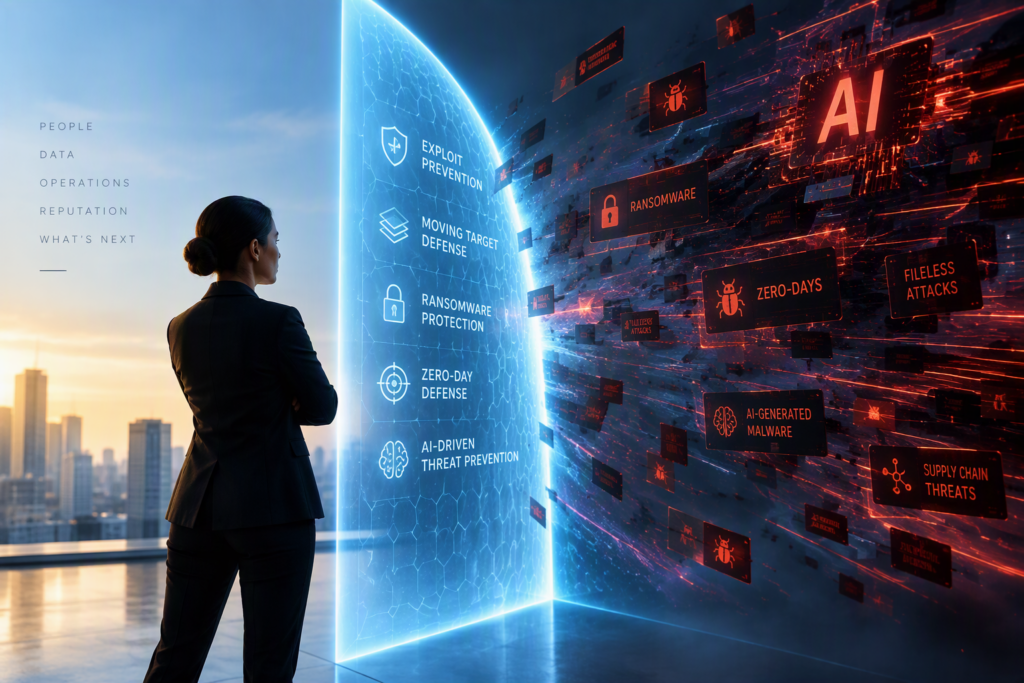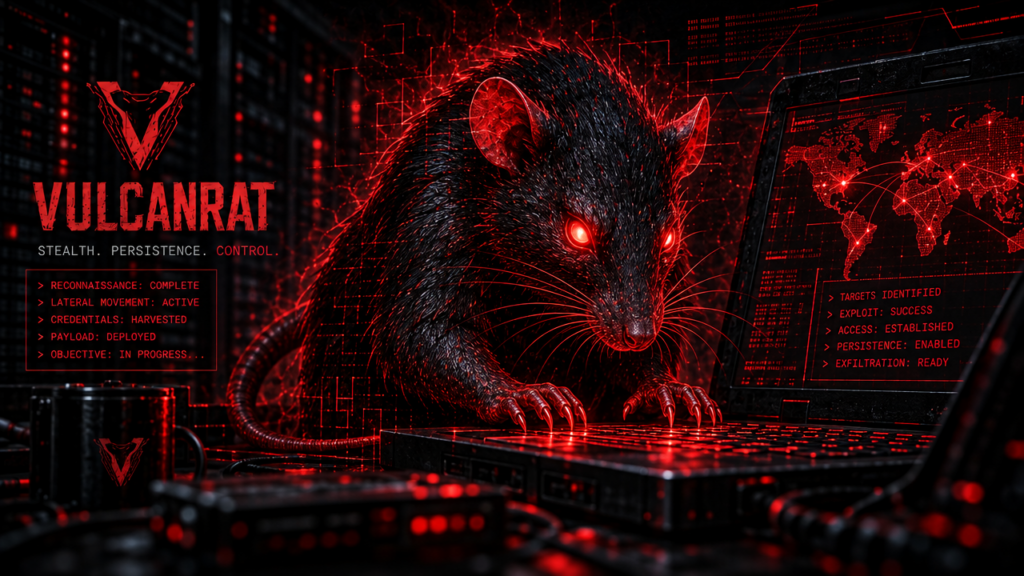



Autonomous agents are AI-driven attack programs that can plan, adapt, and execute an intrusion with little or no human direction; probing for weaknesses, changing tactics in real time, and acting on their findings autonomously. They represent the next stage of threat evolution beyond static malware and human-operated campaigns, and they directly undermine the assumption that defenders can recognize an attack in time to stop it.
The history of offensive cyber is a steady march toward less human effort and more automation. Each step has made attacks faster, cheaper, and harder to detect. Autonomous agents are the logical next step, and the most consequential one for security teams that still rely on detection.
The reason is simple.
Detection-first security depends on recognizing something it has seen or can characterize. An attack that generates novel behavior on the fly, adapts when it is blocked, and never repeats itself offers nothing stable to recognize. Prevention that doesn't depend on recognition is the only model built for this future.
Key Takeaways
- Threats are evolving toward autonomy. The trajectory runs from files, to techniques, to AI-driven agents that act on their own.
- Autonomous agents adapt in real time. They change tactics when blocked, defeating static defenses.
- Detection assumes recognizability. Self-directed, novel attacks remove the patterns detection relies on.
- Prevention doesn't need prior knowledge. Automated Moving Target Defense blocks code that cannot find its target, regardless of how it was generated.
- Future-proofing means prevention-first. The goal is to be ready for threats that haven't been written yet.
The Evolution: From Files to Autonomous Agents
Each stage of threat evolution has reduced the attacker's effort while increasing evasion. Understanding the arc explains why autonomous agents are so disruptive.
| Era | What the threat was | Why defenders coped (or didn't) |
| Signature era | Known malware files on disk | Signatures could match known samples |
| Evasion era | Fileless, in-memory, polymorphic techniques | Detection began to fall behind |
| AI-assisted era | Malware generated and varied with AI | Signatures and models can't keep pace |
| Autonomous era | Self-directed agents that plan and adapt | Nothing stable to recognize |
What Makes Autonomous Agents Different from Malware?
Autonomous agents differ from traditional malware because they make decisions. Conventional malware follows a fixed script; an autonomous agent pursues a goal. It can reconnoiter an environment, choose among techniques, react to defenses, and try alternative paths, compressing the work of a human attacker into software that operates at machine speed.
- Goal-driven, not script-driven. The agent adapts its method to reach an objective.
- Real-time evasion. When one approach is blocked, it tries another without operator input.
- Machine-speed iteration. It can attempt many techniques faster than humans can respond.
- Novel by default. Its behavior is generated, not drawn from a known catalog.
Why Detection-First Security Can't Keep Up
Detection-first tools need a reference point; a signature, a known behavior, a model trained on past attacks. Autonomous agents deny them all three by generating new behavior continuously. This is the same structural problem that preemptive cyber defense was designed to solve: when you cannot reliably recognize the attack, you must prevent it from executing instead.
How Prevention-First Defense Stops What It Can't Predict
Prevention-first defense does not try to predict the attacker's next move. Automated Moving Target Defense (AMTD) morphs the runtime memory environment so that any code attempting to execute cannot find the resources it needs, whether it was written by a human, generated by a model, or directed by an autonomous agent. The attack fails because its target is gone, not because a defender recognized it.
Because this protection is independent of prior knowledge, it is inherently future proof. It runs as a lightweight layer that augments your existing security platform, helping organizations stay ready for the future-proof protection they need against threats that haven't been written yet.
Prepare for Threats That Write Themselves
The shift from malware to autonomous agents is not a question of if but when. The defenders who are ready will be the ones who stopped depending on recognition and started depending on prevention. When attacks can write and rewrite themselves, the only durable advantage is a defense that blocks them before they execute...no matter what they look like.
Get ahead of autonomous, AI-driven attacks with prevention-first defense. Book a Morphisec demo


Stay up-to-date
Get the latest resources, news, and threat research delivered to your inbox.